Overview
The gallbladder is a small pouch under the liver that stores bile. Stones can form inside it and block the flow of bile. Some people with gallstones never have symptoms, while others get repeated attacks of pain, inflammation of the gallbladder (cholecystitis) or jaundice from a blocked bile duct.
Treatment
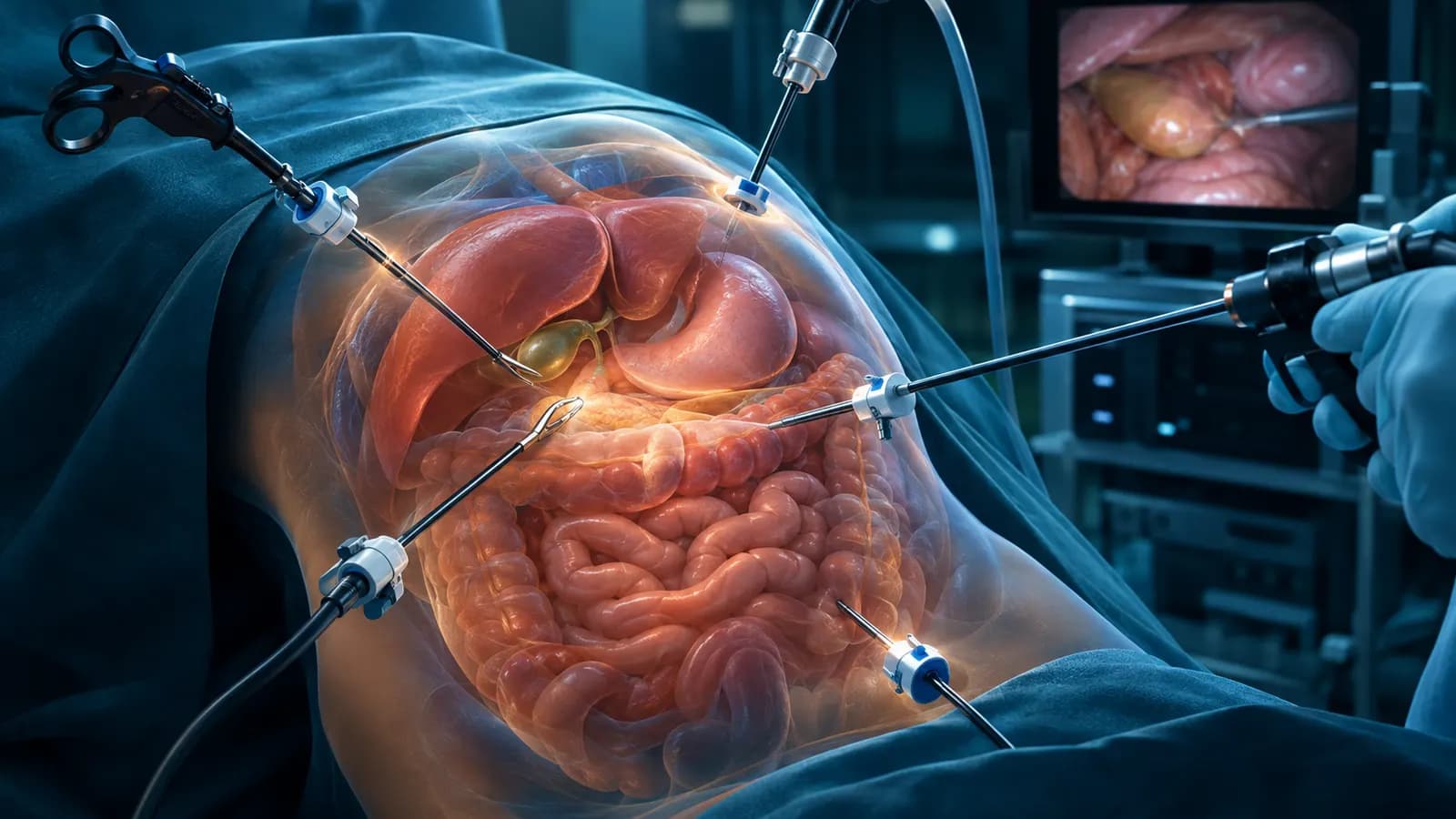
An ultrasound usually confirms gallstones. When stones cause symptoms, the standard treatment is laparoscopic cholecystectomy, which removes the gallbladder through small incisions. People live normally without a gallbladder. Some complications need earlier surgery, so the surgeon will advise you on timing.
Common symptoms
- Pain in the upper right or middle of the abdomen, often after oily food
- Pain spreading to the right shoulder or back
- Nausea, vomiting, bloating or indigestion
When to see a doctor
- Pain that lasts several hours or keeps coming back
- Fever with abdominal pain
- Yellow eyes or skin (jaundice), dark urine or pale stools
If you have severe pain, vomiting, fever or heavy bleeding, go to the nearest emergency department.
This page is for general information and does not replace a consultation.