Overview
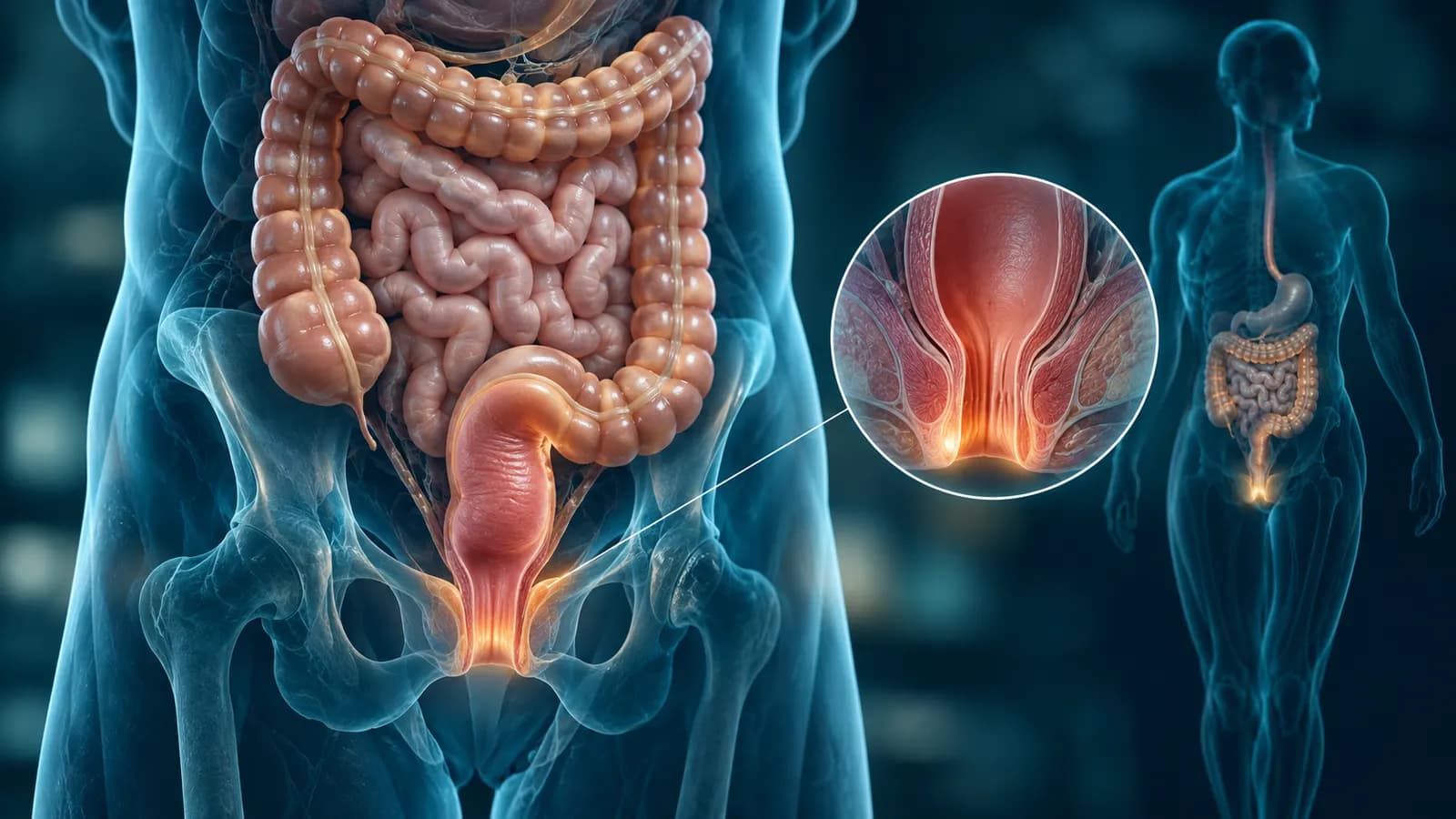
A fissure usually follows passing a hard stool or long-standing constipation, although diarrhoea can cause one too. Because of the pain, many people hold back from going to the toilet, which makes both the constipation and the fissure worse.
Treatment
Most recent fissures heal with a high-fibre diet, plenty of fluids, stool softeners, warm sitz baths and prescribed ointments. A fissure that has not healed after several weeks (chronic fissure) may need a minor procedure. The surgeon examines you to confirm the diagnosis.
Common symptoms
- Sharp, cutting pain while passing stool
- A burning pain that can last for hours afterwards
- A few drops of bright red blood
- A small skin tag near the anus in long-standing fissures
When to see a doctor
- Pain or bleeding that lasts more than one or two weeks
- The fissure keeps coming back
- Bleeding along with a change in bowel habit or weight loss
If you have severe pain, vomiting, fever or heavy bleeding, go to the nearest emergency department.
This page is for general information and does not replace a consultation.